Research Areas in The Miller Lab at The University of Chicago
Research in the Miller Lab focuses primarily on studying fundamental particles and their interactions -- for example, the quarks and gluons that comprise everyday protons and neutrons. Most notably, we make use of the highest energy proton-proton collisions ever made in a laboratory at the Large Hadron Collider (LHC) at CERN in Geneva, Switzerland.
We build novel instrumentation, high-speed electronics, real-time algorithms for data processing, and cutting-edge analysis techniques for studying these interactions. Data collected using the ATLAS detector allow us to perform some of the most sensitive measurements of the Standard Model of Particle Physics to date, as well as to search for new phenomena produced in the collisions at the LHC.
One of the group's specialties is studying the properties of the experimental signatures of quarks and gluon -- or ``jets.''
We also pursue novel new experiments, such as the MilliQan experiment searching for electrically charged particles that might be produced at the LHC, but missed due to their extremely small fractional charges (a.k.a. milli-charged).


Recent Publications
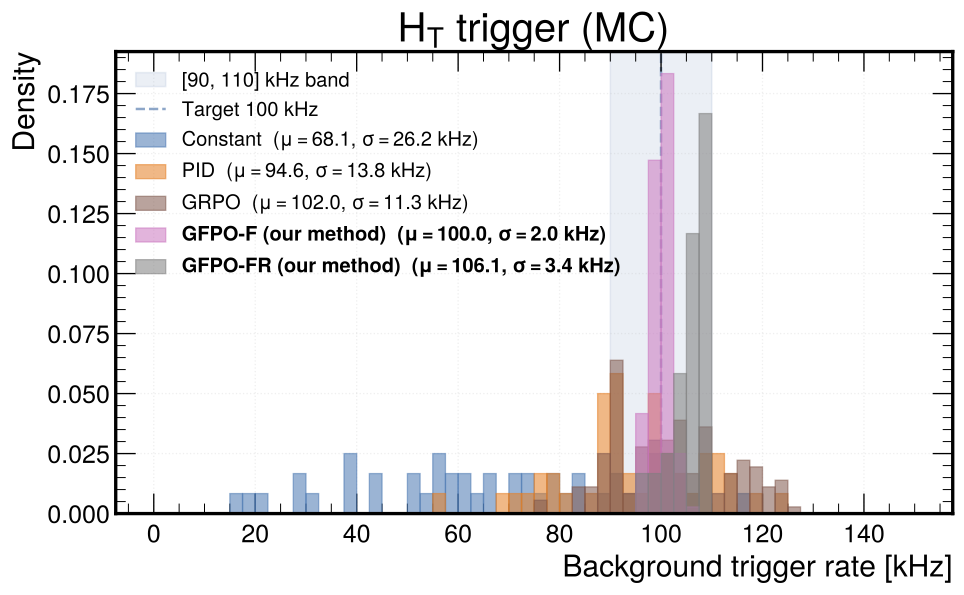
Z. Ding, S. Emami, G. Salvi, C. Tosciri, A. Gandrakota, J. Ngadiuba, N. Tran, C. Herwig, D. W. Miller, Y. Chen, "Learning to Trigger: Reinforcement Learning at the Large Hadron Collider" Best Paper Award, AI4Physics @ ICML 2026 [arXiv:2606.23993] (2026)
N. Clarke Hall, I. Xiotidis, N. Konstantinidis, D. W. Miller, "End-to-end optimisation of HEP triggers" [arXiv:2603.08428] (2026)

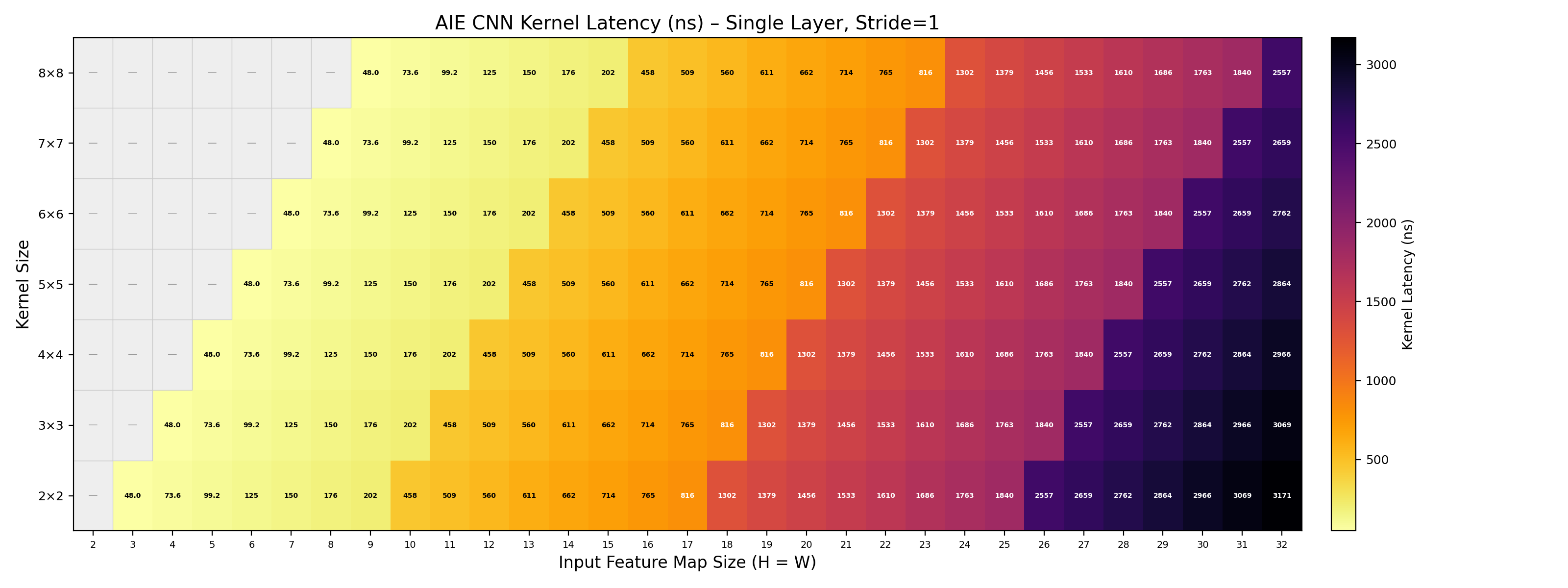
I. Xiotidis, N. Clarke Hall, T. Du, N. Konstantinidis, D. W. Miller, "AMD Versal AI-Engines for fixed latency environments" [arXiv:2603.13852] (2026)
Kristin Dona, Jan Offermann, Ben Rosser, David Miller (+ ATLAS collaborators), "Search for displaced decays of long-lived particles in events with missing transverse momentum in √s = 13 TeV pp collisions with the ATLAS detector" accepted by JHEP [arXiv:2603.12051] (2026)

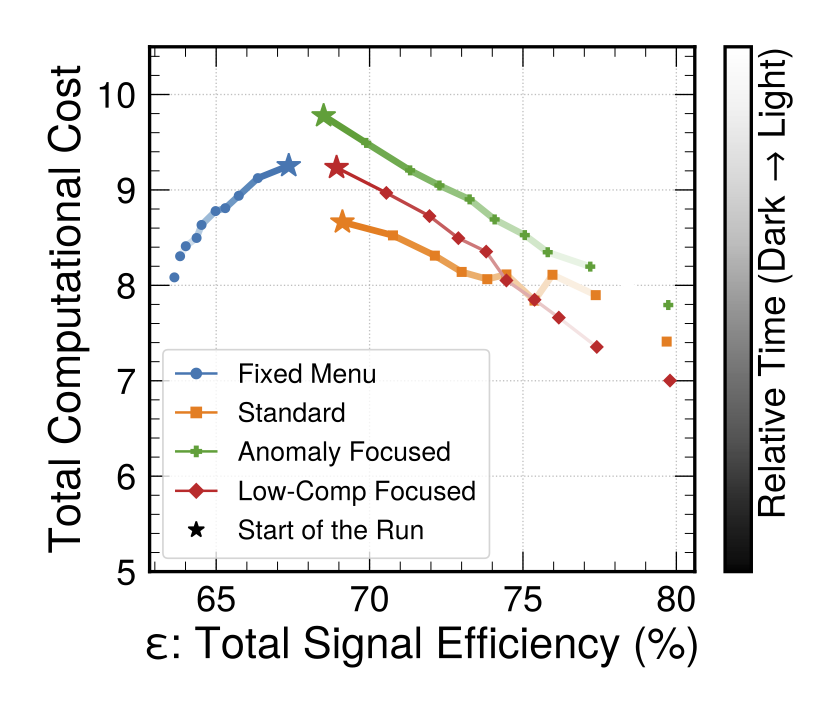
S. Emami, C. Tosciri, G. Salvi, Z. Ding, Y. Chen, A. Gandrakota, C. Herwig, D. W. Miller, J. Ngadiuba, N. Tran, "Towards a Self-Driving Trigger at the LHC: Adaptive Response in Real Time" accepted by Mach. Learn.: Sci. Technol. [arXiv:2601.08910] (2026)
Our Affiliations


Our Funding


