The Miller Lab at The University of Chicago


The Miller Lab explores the properties of fundamental particles at the edge of current technologies, using the highest energy proton-proton collisions ever produced in a lab at the Large Hadron Collider at CERN in Geneva, Switzerland using the novel instrumentation of the ATLAS Experiment, dedicated high-speed electronics and real-time data processing, and cutting-edge data analysis algorithms.


Triggering on Lorentz-boosted objects

Complex objects often slip past our data filtering systems (triggers). By constructing extremely fast, sophisticated electronics systems that specifically search for these complex structures in real-time, we can recover these otherwise lost objects. This is the gFEX boosted object trigger for Run 3 of the LHC.

Exploring the Standard Model in extreme conditions

The Standard Model offers detailed predictions of the interactions of quarks and gluons with massive gauge bosons. Tests of these predictions at the most extreme energies accessible in the lab shed more light on our current understanding of the theoretical tools and the theory itself, as well as aiding in the search for new physics.


Searching for milli-charged particles

Though over a quarter of the mass-energy of the universe is widely thought to be some kind of non-luminous dark matter (DM), all experiments to date have failed to directly detect it, much less measure its properties. The milliQan experiment offers a new approach to detecting new fractionally-charged matter that could constitute a component of the dark matter.

Searching for axions and dark photons

Axions are a leading candidate for both Dark Matter and as a solution to the Strong CP problem in the Standard Model of Particle Physics. Our group is embarking on a new broadband (wide mass range) search for axions using a novel reflector concept that aims for sensitivity in the THz (meV) parameter range. As part of the R&D process, we've built a THz Fourier Transform Spectrometer to characterize the detector components.


Machine Learning for Particle Physics

Particle Physics has benefitted from, and in many ways strengthened and advanced, progress in AI/ML for decades due to its proliferation of enormous data sets, complex instrumentation, and computing infrastructure. Our group is engaged in efforts to target important problems relevant to the use of of machine learning, symmetries, and domain knowledge in particle physics.

White Paper 08/04/2026

David Miller

Our community roadmap white paper "Machine Learning on Heterogeneous, Edge, and Quantum Hardware for Particle Physics (ML-HEQUPP)", with David Miller and collaborators Ioannis Xiotidis and Christian Herwig among the editors, has been officially accepted to PRX Intelligence as a Roadmap!

In the news... 07/27/2026

Conference 07/23/2026

David MillerCecilia Tosciri

Christian Herwig presents work done with David Miller and Cecilia Tosciri on the self-driving trigger at the DPF 2026 Conference at Fermilab.

Conference 07/23/2026

Gabe Hoshino

Gabe Hoshino presents BREAD at the DPF 2026 Conference at Fermilab.

Calorimetry

Calorimetry

High-Speed Electronics

High-Speed Electronics

Jet Substructure & Boosted Objects

Jet Substructure & Boosted Objects

Standard Model Measurements

Standard Model Measurements

Searches for New Physics

Searches for New Physics

MilliQan Experiment

MilliQan Experiment

Axion Searches

Axion Searches

Machine Learning for Particle Physics

Machine Learning for Particle Physics

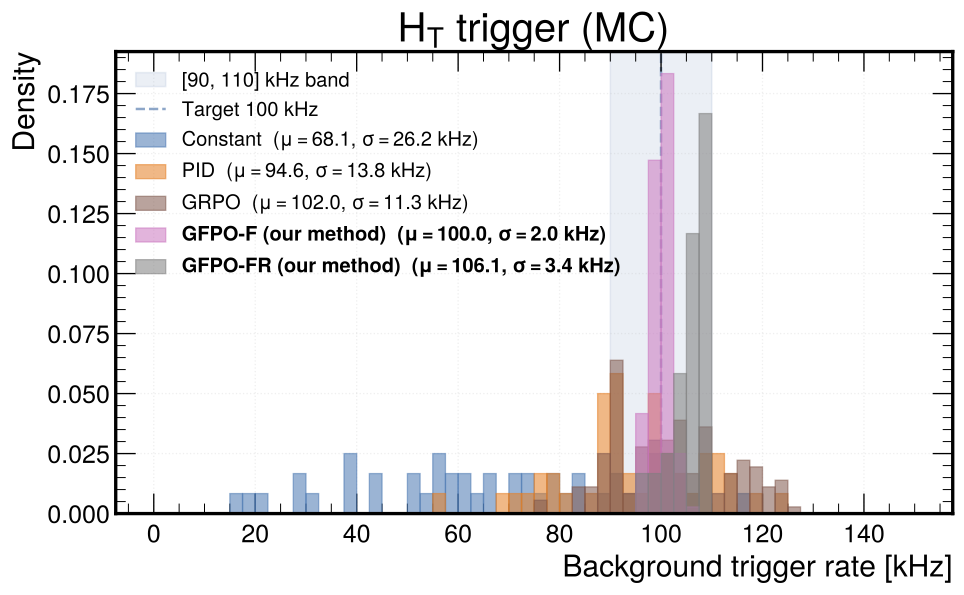
Z. Ding, S. Emami, G. Salvi, C. Tosciri, A. Gandrakota, J. Ngadiuba, N. Tran, C. Herwig, D. W. Miller, Y. Chen, "Learning to Trigger: Reinforcement Learning at the Large Hadron Collider" Best Paper Award, AI4Physics @ ICML 2026 [arXiv:2606.23993] (2026)

***Trains a reinforcement-learning agent to automatically tune LHC trigger thresholds in real time as detector conditions drift, rather than relying on static, hand-tuned menus. Shown to work not just in simulation but on real CMS collision data, marking the first demonstration of RL-based trigger control on LHC data.***

N. Clarke Hall, I. Xiotidis, N. Konstantinidis, D. W. Miller, "End-to-end optimisation of HEP triggers" [arXiv:2603.08428] (2026)

***Explores jointly optimizing trigger selection algorithms against upstream embedded system constraints and downstream physics performance, rather than tuning trigger stages in isolation.***

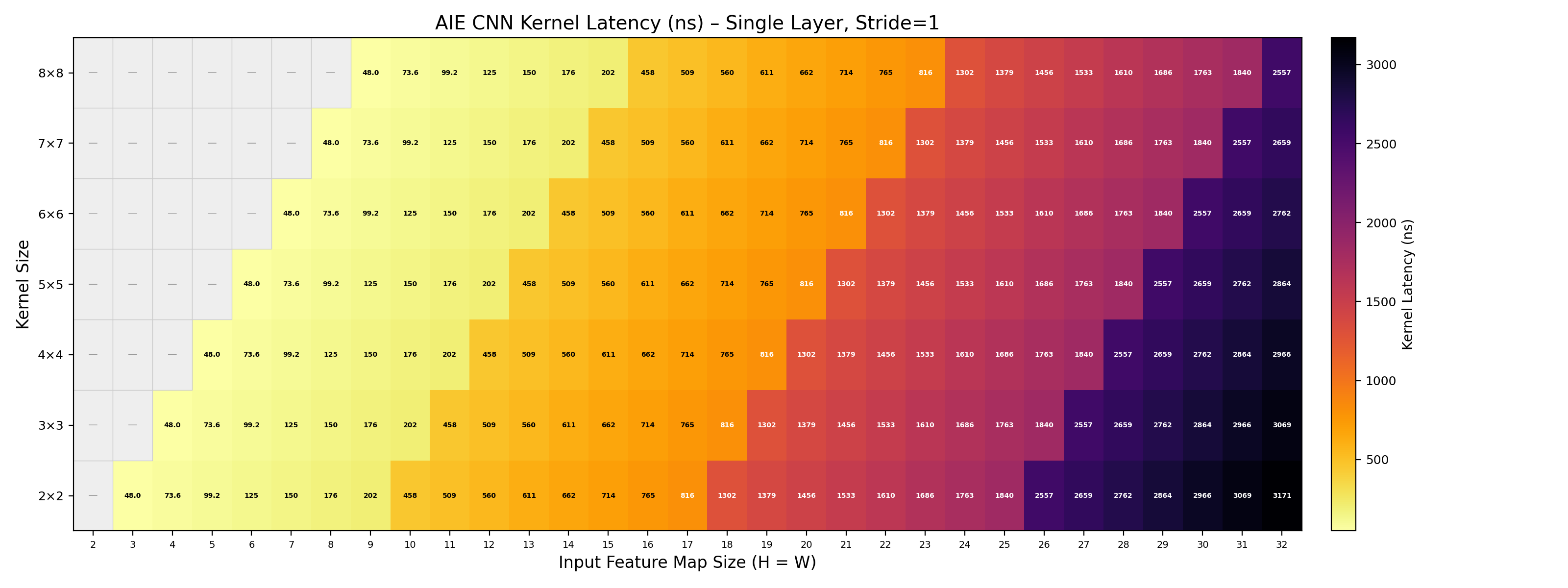
I. Xiotidis, N. Clarke Hall, T. Du, N. Konstantinidis, D. W. Miller, "AMD Versal AI-Engines for fixed latency environments" [arXiv:2603.13852] (2026)

***Studies deploying machine-learning inference on AMD Versal AI Engines for real-time trigger hardware, focusing on achieving strict, deterministic latency guarantees required for collider trigger decisions.***

Kristin Dona, Jan Offermann, Ben Rosser, David Miller (+ ATLAS collaborators), "Search for displaced decays of long-lived particles in events with missing transverse momentum in √s = 13 TeV pp collisions with the ATLAS detector" accepted by JHEP [arXiv:2603.12051] (2026)

***Searches for new particles with experimental sigantures of displaced vertices combined with missing transverse momentum. In particular, we place constraints on axinos, the supersymmetric partner of the axion, using the model developed in the paper below (Hoshino, et al, Bridging the divide: axion searches and axino phenomenology at colliders).***

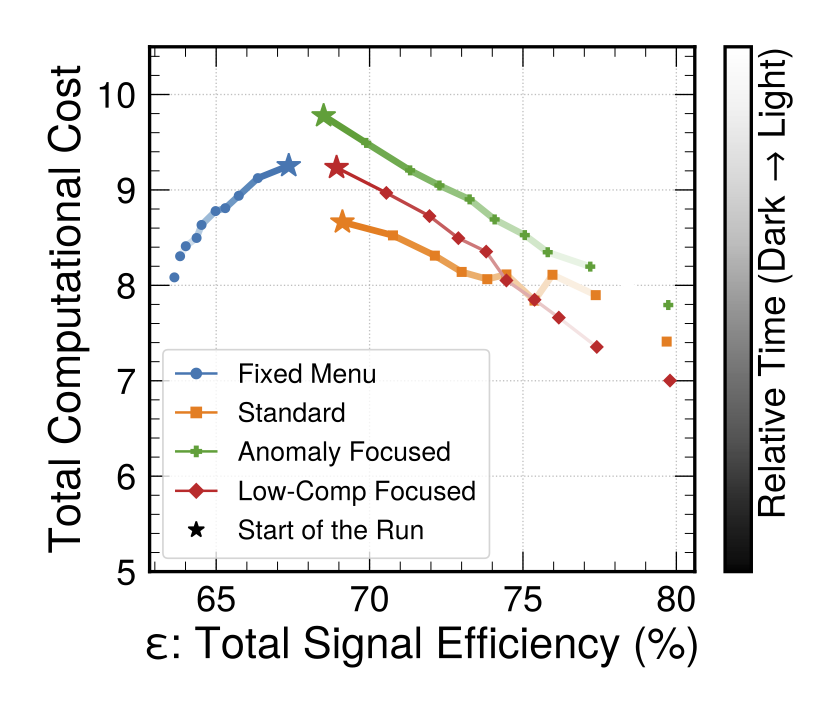
S. Emami, C. Tosciri, G. Salvi, Z. Ding, Y. Chen, A. Gandrakota, C. Herwig, D. W. Miller, J. Ngadiuba, N. Tran, "Towards a Self-Driving Trigger at the LHC: Adaptive Response in Real Time" accepted by Mach. Learn.: Sci. Technol. [arXiv:2601.08910] (2026)

***Proposes a multi-tier framework using dynamic controls based on traditional PID-loop style operations to let LHC trigger systems adapt autonomously to changing beam and detector conditions, laying groundwork for a fully self-driving trigger. Followed-up by the paper above which implements a full reinforcement learning (RL) approach to trigger control and operations (Ding, et al, Learning to Trigger: Reinforcement Learning at the Large Hadron Collider).***

G. Hoshino, K. Dona, K. Harigaya, D. W. Miller, J. T. Offermann, B. Pol, B. Rosser, C. Tosciri, "Bridging the divide: axion searches and axino phenomenology at colliders" accepted by JHEP [arXiv:2511.07224] (2025)

***Connects two normally separate search strategies for axion-like particles, direct-detection haloscope experiments like BREAD and collider searches for the axino, the axion's supersymmetric partner, showing how the two approaches constrain complementary regions of parameter space.***

University of Chicago
Physical Sciences Division
Physics Department
Enrico Fermi Institute
College
NSF
DOE
UChicago
Neubauer
Chicago France Center
Center for Data and Applied Computing